
Models Round Table · Joint Model Validation
National Cordon & Screenline Survey
How I orchestrated the survey methodology and coordinated the placement of hundreds of count stations across Israel's transport authorities — Netivei Israel, Netivei Ayalon and the Jerusalem Transportation Master Plan Team — creating the first traffic count survey with full national coverage.
Follow the story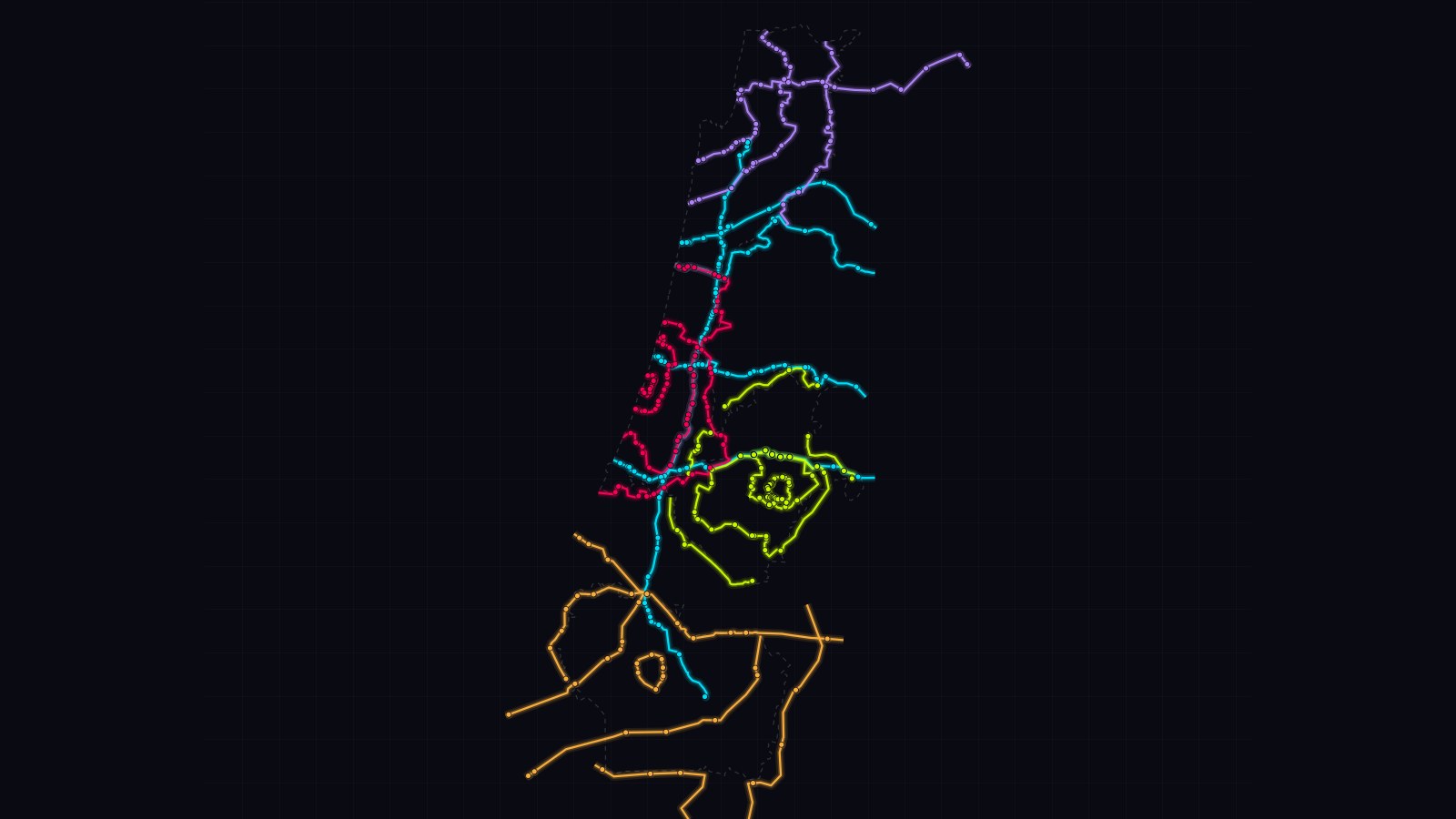 CASE STUDY / 01
The question
One Unified Map for Validating All of Israel's Strategic Transport Models
Cordon and screenline counts are the gold standard for validating transport models: strategic measurement lines are drawn across the road network, and every road crossing them gets counted. Previous Israeli surveys covered single metropolitan areas. The 2026 survey is the first with full national coverage — all five strategic models, one methodology, one shared map. My role: orchestrate the methodology and coordinate, with all partners, exactly where every count station goes.
- My contribution
- Coordinating survey methodology and count-location planning across transport authorities.
- The deliverable
- A shared geographic framework of cordons, screenlines and proposed count points.
- What it enables
- Organizing comparable field measurements for strategic transport-model validation.
The approach / 01
28 cordon and screenline lines were defined relative to the boundaries of the metropolitan and national models — closed rings ('cordons') around cities and metropolitan areas, and crossing lines ('screenlines') along natural or artificial barriers.
The approach / 02
Every road crossing a line becomes a count station. Each candidate crossing was examined individually — questionable ones (minor local or agricultural roads) were explicitly resolved with the responsible authority, converging on 355 final stations.
The approach / 03
The full map — lines, stations and model boundaries — lives in a single shared GeoPackage. Each authority reviewed its region, moved or confirmed stations, and the agreed version became the binding execution plan.
The approach / 04
Strict timing rules preserve data consistency: all lines of a region are counted within a single two-month window, and each individual line within one or two days — so entry/exit balances can actually be verified.
The evidence
The Survey Map
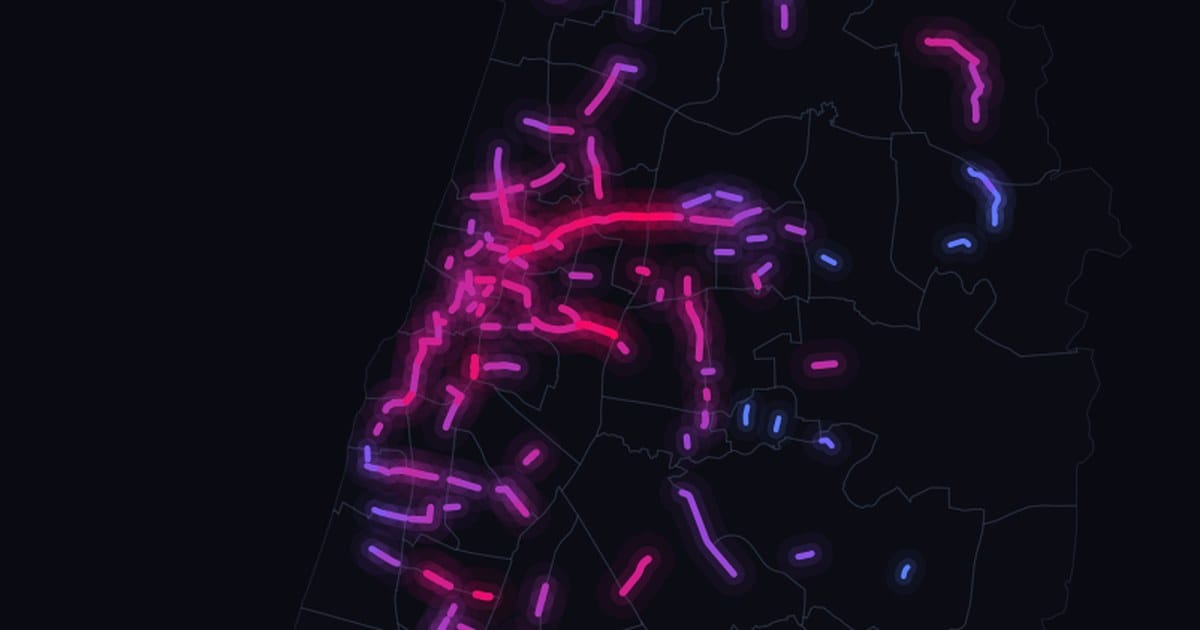
28 cordon & screenline lines, 355 count stations, five model regions. Hover or tap a line for details, and use the legend to filter by region.
Loading the interactive visualization…
What you are seeingSurvey design: cordons, screenlines and proposed counting points. The map shows the plan, not completed traffic measurements.
Read the survey, one layer at a time.
- Cordon
- A boundary around an area. Counting its road crossings helps describe traffic entering and leaving.
- Screenline
- A line across a corridor or part of the network. Its crossings provide a shared reference for comparing model flows.
- Field plan
- Each crossing still needs an operational review: location, access and safety affect how a count can be carried out.
The source contains 414 mapped points: 355 without a low-priority flag and 59 marked low priority. Safety and other flags can overlap. These are planning records, not completed measurements.
The approach
Orchestrating Three Authorities
Each authority — Netivei Israel (national model), Netivei Ayalon (Tel Aviv, Haifa and Be'er Sheva models) and JTMT (Jerusalem) — executes the counts in its own territory, with its own contractors and budget. My work was making sure this decentralized execution produces one coherent national dataset: a standard station-placement methodology, a unified GIS data structure, shared vehicle classification, synchronized timing rules, and a clear escalation path to the Round Table for overlaps and disputes.
Why It Matters
From evidence to a decision.
Strategic transport models drive multi-billion shekel infrastructure decisions — and they are only trustworthy if periodically validated against reality. This survey creates the reference dataset for validating all of Israel's strategic models in a single coordinated cycle, designed to repeat every two years.
Five models, three authorities, one map. The entire survey lives in a single shared GeoPackage that every partner reviews, refines and executes from.Get in Touch
The next perspective
Traffic Count Sampling Design
Centrality-based sampling methodology, presented at ISTRC 2026.
Explore case studyAll projects